
The Story of Jala University: {Where Transformational Education Begins}
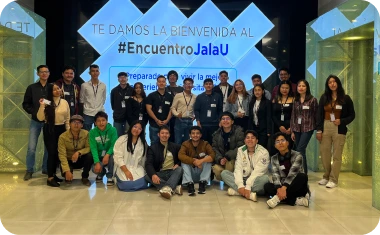
Jala University was founded in 2021 as a bold and strategic response to one of Latin America’s most persistent challenges: the profound disconnect between traditional academic education and the practical demands of the technology industry. The institution was born from the vision of Jorge B. López Lafuente, a Bolivian-American software engineer and entrepreneur who, after a successful career in Silicon Valley California—as one of the early employees at Adobe Systems and a co-founder of NetIQ—returned to his home country with a clear mission: to create meaningful opportunities through knowledge.
A Vision That Began in 2001 Although Jala University officially launched in 2021, its roots trace back to 2001, when Jorge began investing in Bolivia—a country that, at the time, still lacked internet access and faced countless structural disadvantages. Despite those obstacles, Jorge moved forward with a visionary project. From over 300 applicants, only six were selected, marking the beginning of a decades-long educational journey. By hiring the best and designing an in-house training model, Jorge built a team and a system in which experienced engineers at Jalasoft trained newcomers using real industry problems.
These early bootcamps, long before the term became mainstream, embodied a simple but powerful approach: learning by doing, guided by excellence.
Fundación Jala:
Tackling the Educational GapOver time, Jorge’s team uncovered a deeper problem: Bolivian university graduates entered the job market with only 30–35% of the knowledge needed to meet U.S. industry standards. To address this gap, Jorge’ team founded Fundación Jala, an institution dedicated to raising that level. In just 12 months, its intensive programs helped graduates reach 60% proficiency, covering topics they had never seen in five years of formal university studies.
After this stage, students were hired as junior engineers at Jalasoft and spent two more years receiving full salaries and benefits while continuing to train. It took three years to fully prepare an export-ready engineer,“ an engineer ready for the industry “ , a significant investment, but one that paid off in high-impact, high-quality talent.

A Dream University and the Toughest Decision Along the way, Jorge attempted to implement this model within private and public universities. Unfortunately, these efforts failed: private institutions were more focused on profit than quality, and public faculty members were unwilling to upskill to the level required by the tech industry. Still, Jorge did not give up. He proposed creating a new university through the Catholic Church, securing approval in Romeafter six years of planning. The campus was to be built on 30 hectares of land, dedicated entirely to education with an industry-aligned vision. But then, the COVID-19 pandemic hit, and Jorge faced the hardest decision of his life.

Rather than pause the dream, he pivoted, seeing in the crisis an opportunity: to take his model digital and scale it across borders, bringing the vision that transformed Cochabamba, Bolivia to other underserved regions across Latin America.
There, the impact was clear: young Jalasoft engineers were buying new apartments and cars, qualifying for home and auto loans—things previous generations spent a lifetime trying to achieve. This was the power of education designed for real economic transformation.
Jala University today
For over two decades, Jorge has led Jalasoft, growing the company from 6 to over 1,000 plus engineers, proving that world-class talent can be built in Latin America. And not just any engineers, engineers capable of tackling the most demanding high-tech challenges in the U.S. market.


Jala University was born to institutionalize this success. It bridges the outdated, overly theoretical education models with the realities of a rapidly evolving digital economy. Its programs are 100% online, in both Spanish and Portuguese, and designed in close collaboration with active professionals from the tech industry.
From day one, students work on real projects, receive mentorship, and graduate not only with academic credentials, but with the skills and experience to solve real-world problems at the highest level. But there is something even more fundamental that sets Jala University apart: students do not pay—and never will. Charging students for education is not the right model. It often leads to frustration and long-term issues for both sides: graduates who struggle to find their first job, and companies unwilling to invest in junior talent that lacks industry-relevant skills.
In this model, the industry funds the education, ensuring that students receive the training and practical experience they need to succeed, while companies gain access to professionals who are fully prepared for the demands of the global tech market. It’s not just a financial model, it’s a transformation strategy for both students and employers.
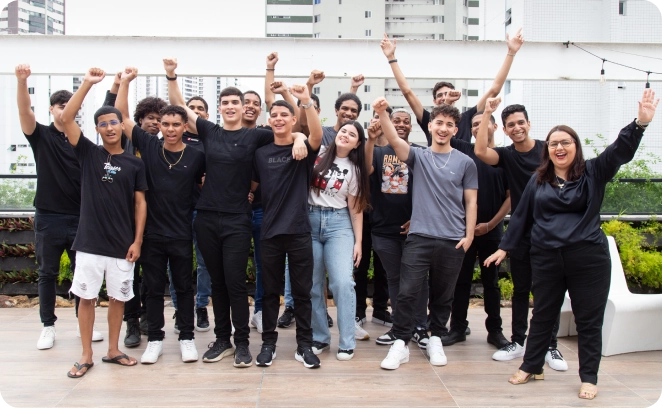
More than a university: a continental vision
Jala University is not just an academic institution, it is the pillar of a greater mission: to accelerate Latin America’s transition from an analog, resource-based economy to a knowledge-based digital economy,
where innovation is driven by human talent, creativity, and critical thinking.
For Jorge, “saber”—the fusion of education and hands-on experience—is the most valuable asset a society can develop.
Today, the university is expanding across multiple countries in the region, forming partnerships with leading companies, and preparing hundreds of students to succeed globally. Its founding not only addresses an urgent need, it stands as a bold commitment to unlocking Latin America’s hidden potential, and a vision for a future transformed by education.